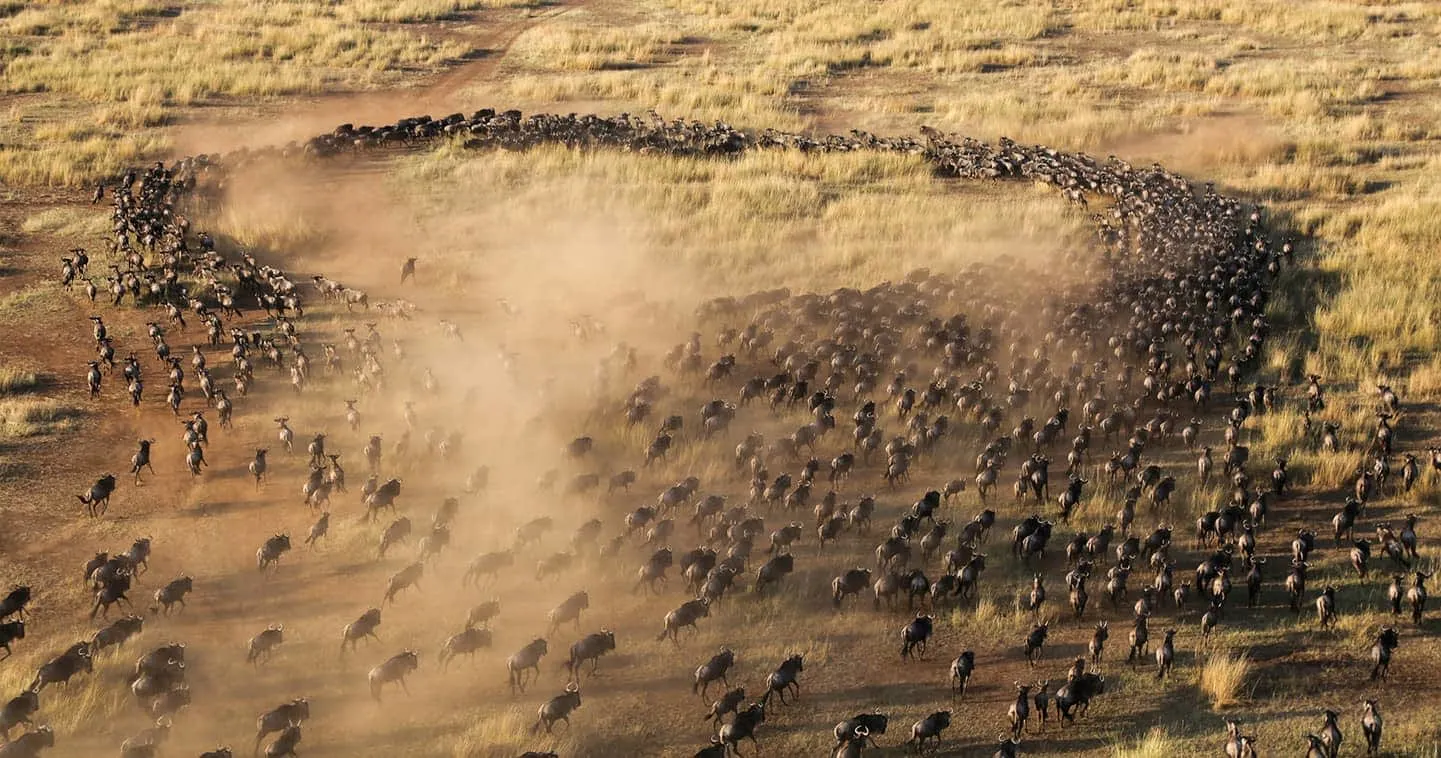
The Great Migration in Africa
A complete guide to nature’s greatest spectacle
The Great Migration is one of the most extraordinary wildlife events on Earth, unfolding each year across the vast plains of East Africa. Imagine a living river of over 1.5 million wildebeest, joined by hundreds of thousands of zebras and gazelles, all moving in an endless cycle across the savannahs of Tanzania and Kenya.
This is not random movement, but an ancient, instinct-driven journey shaped entirely by the rhythm of the rains. Guided by the search for fresh grass and water, the herds travel nearly 3,000 kilometers each year. Their route takes them through the iconic Serengeti and Maasai Mara — landscapes as beautiful as they are unforgiving, where predators wait at every turn.
This journey is as dramatic as it is beautiful. River crossings, where animals plunge into crocodile-filled waters, have become some of the most powerful scenes in the natural world. Survival here depends on timing, instinct, and luck.
In this guide, we’ll explore what the Great Migration really is, the route the herds follow, when and where to witness it at its peak — and the challenges that make it one of nature’s most gripping stories.
What Is the Great Migration?
The Great Migration isn’t a journey from point A to point B — it’s a continuous cycle with no true beginning or end. At its core is an ancient survival instinct that drives millions of herbivores to follow the rains across the vast Serengeti–Mara ecosystem.
The key players in this movement:
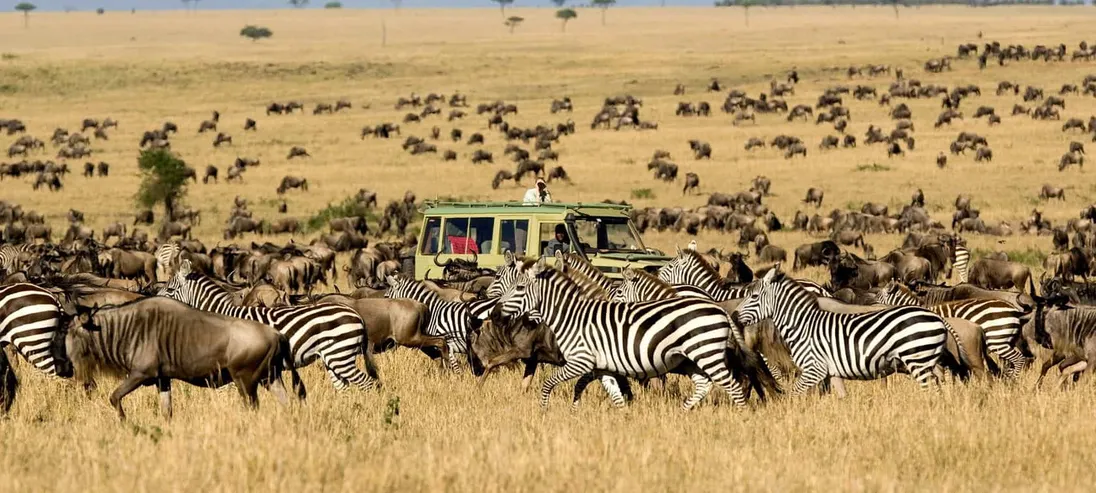
Wildebeest — over 1.5 million animals form the backbone of the migration. Their seemingly unpredictable decisions set the pace and direction for the entire herd.
Zebras — around 200,000 travel alongside them, grazing on tougher grasses and clearing the way for fresh shoots that wildebeest prefer.
Thomson’s gazelles and other antelope — hundreds of thousands join the flow, completing this vast, living system.
The driving force behind it all is the weather. Seasonal rains determine where fresh grazing can be found. The animals instinctively move toward water and new grass, sustaining themselves and their young. Their lives become an endless loop — a journey shaped by risk, instinct, and renewal.
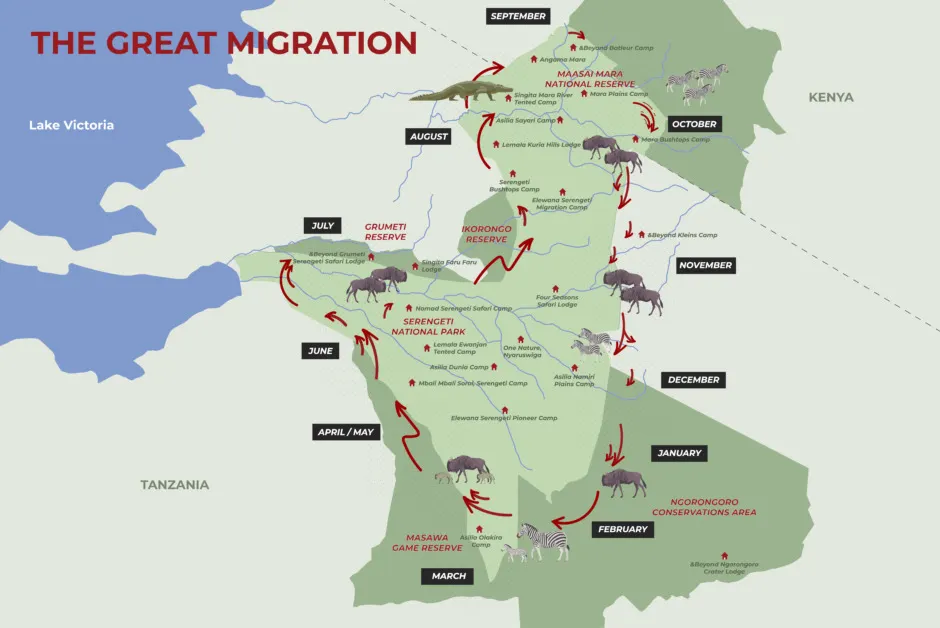
The Route & Calendar of the Migration: Where and When to Go
Understanding the migration cycle is key to planning an unforgettable safari. While nature doesn’t follow a strict schedule, there are clear seasonal patterns.
December – March: The Calving Season (Southern Serengeti, Tanzania)
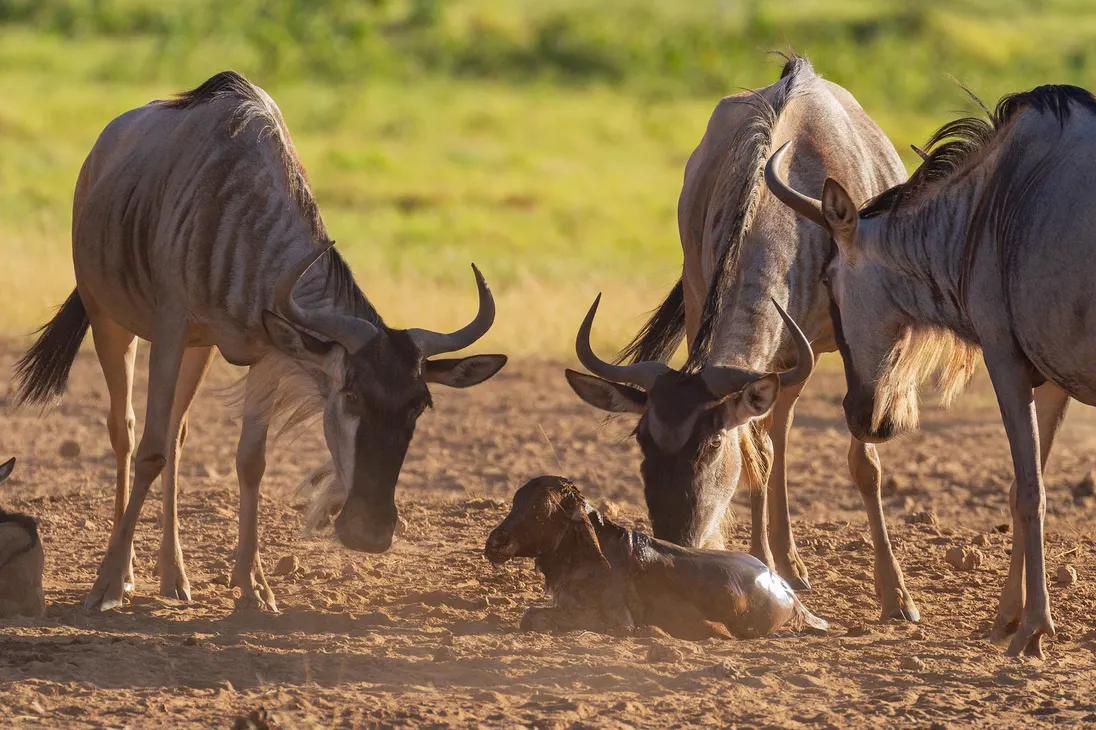
By December, the herds reach the fertile southern plains of the Serengeti and the Ndutu region. This is the peak of new life: between January and March, around 500,000 wildebeest calves are born.
The plains turn into a vast nursery — and, inevitably, a hunting ground. Lions, cheetahs, hyenas, and leopards are drawn to the abundance of vulnerable prey.
Where: Southern Serengeti, Ngorongoro Conservation Area (Ndutu)
What to expect: Mass calving, intense predator activity
April – May: Moving North (Central & Western Serengeti)
As the short rains end, the southern plains dry out. This signals the herds to move. Now stronger and with young in tow, they begin heading north and west into the Serengeti’s Western Corridor.
This period overlaps with the long rains — making travel more challenging, but also quieter and less crowded.
Where: Central Serengeti (Seronera), Western Corridor
What to expect: Long columns of animals on the move
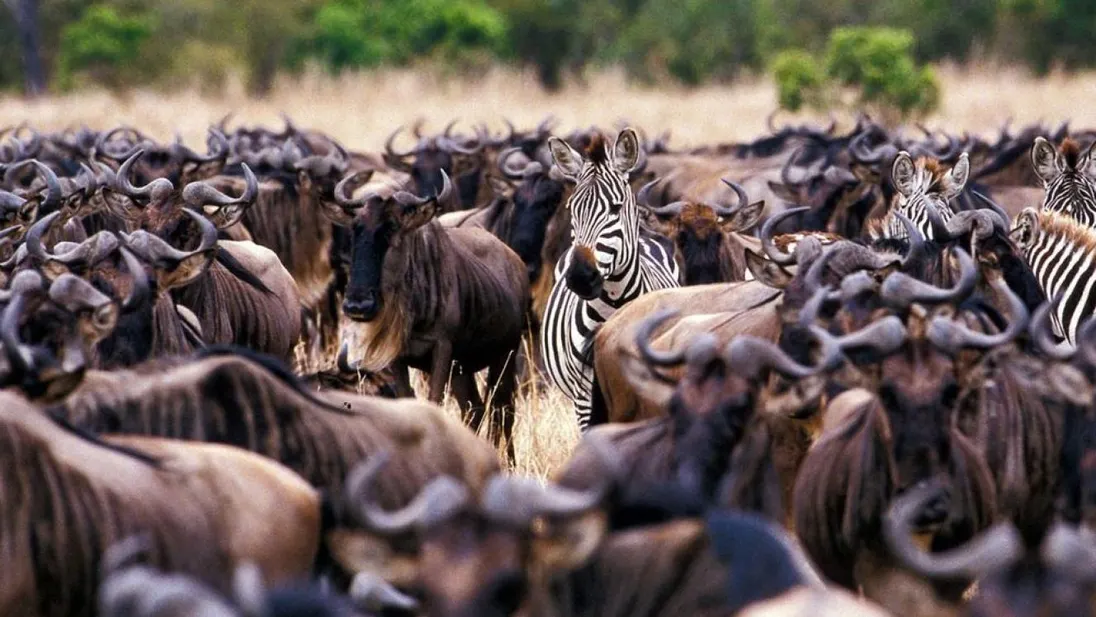
June – July: The Grumeti River Crossing (Western Serengeti, Tanzania)
In the Western Corridor, the herds face their first major obstacle — the Grumeti River. Though smaller than the Mara, it’s home to massive Nile crocodiles waiting for this moment.
The crossings here are tense, unpredictable, and often dramatic.
Where: Western Serengeti, Grumeti River
What to expect: River crossings, crocodile encounters
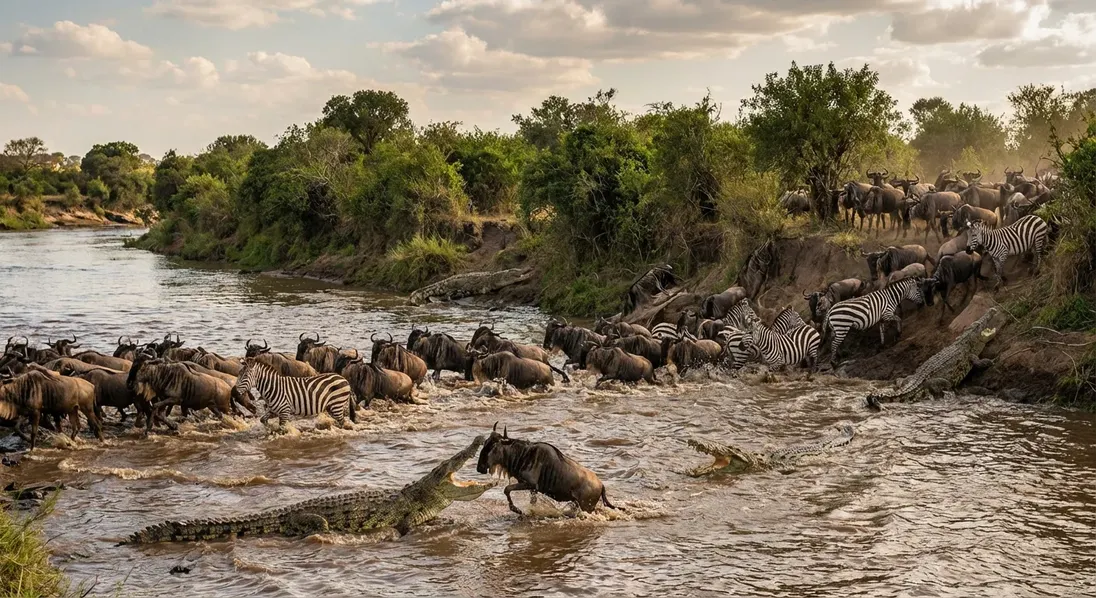
August – October: The Mara River Crossing (Northern Serengeti & Maasai Mara)
This is the most famous and visually striking phase of the migration.
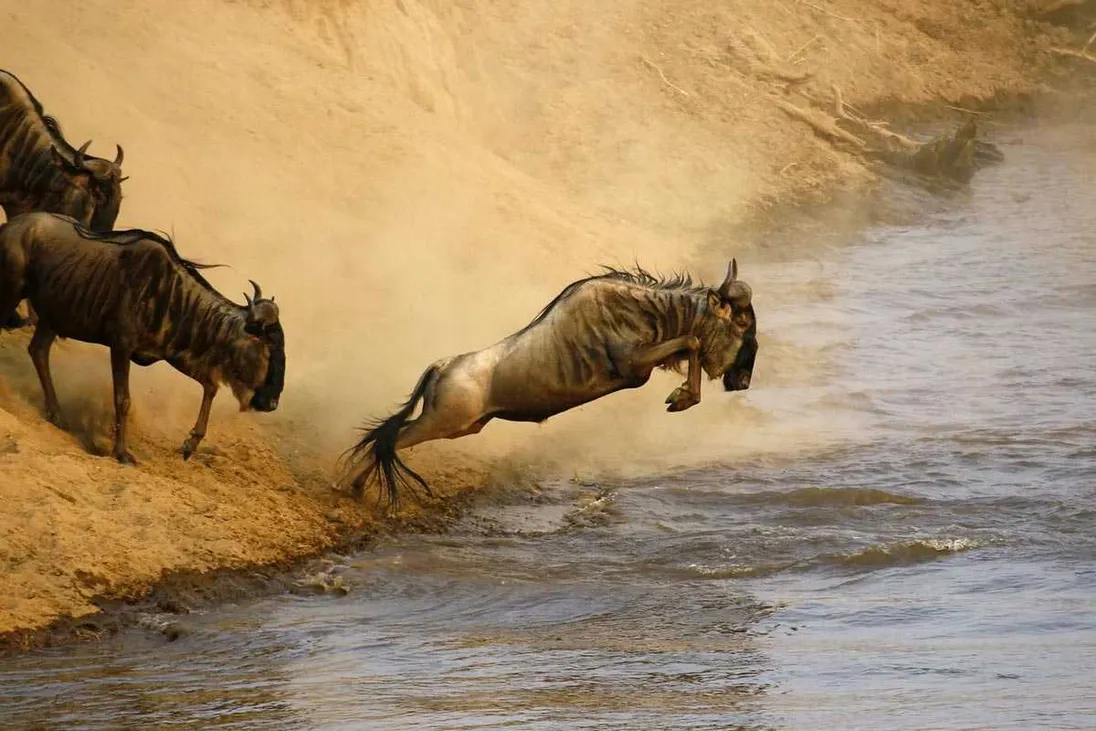
The herds reach the northern Serengeti and cross into Kenya’s Maasai Mara, where they face the Mara River — the ultimate test. Animals gather at the banks, hesitate, and then suddenly plunge into the water, triggering a chain reaction as thousands follow.
These crossings are raw, chaotic, and unforgettable — the very essence of survival.
Where: Northern Serengeti (Tanzania), Maasai Mara (Kenya), Mara River
What to expect: Iconic river crossings, peak safari season
November: The Journey South
After grazing in the Maasai Mara, the herds begin their journey back south, drawn by fresh grass following the short rains. By December, they return to the southern Serengeti — and the cycle begins again.
Facts & Numbers
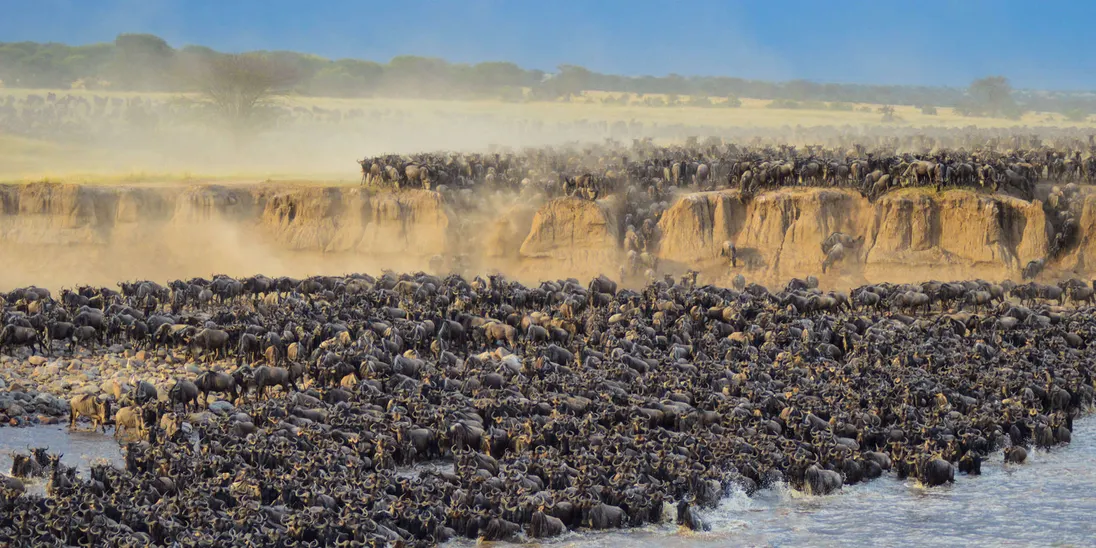
Over 1.5 million wildebeest take part each year — the largest land migration on Earth.
800–1,000 km traveled annually across Serengeti and Maasai Mara.
Up to 500,000 calves born within just a few weeks.
200,000+ animals die each year — from predators, exhaustion, disease, and river crossings.
The Mara River is the most dangerous point — crocodiles receive a large share of their yearly food during this time.
Hundreds of species depend on the migration — from big cats to vultures and even insects.
How to Experience the Great Migration
Reading about the Great Migration is one thing — witnessing it in person is something else entirely.
To truly experience it, timing and location are everything. The best journeys are carefully designed around the movement of the herds — whether it’s calving season in the Serengeti or dramatic river crossings in the Maasai Mara.
At Big Magic Studio, we design bespoke journeys across East Africa — from Kenya to Tanzania — ensuring you are exactly where you need to be, at the right moment.
Reach out to us, and we’ll help you plan a journey that brings this extraordinary natural event to life.